WildersDMI_v1
Download script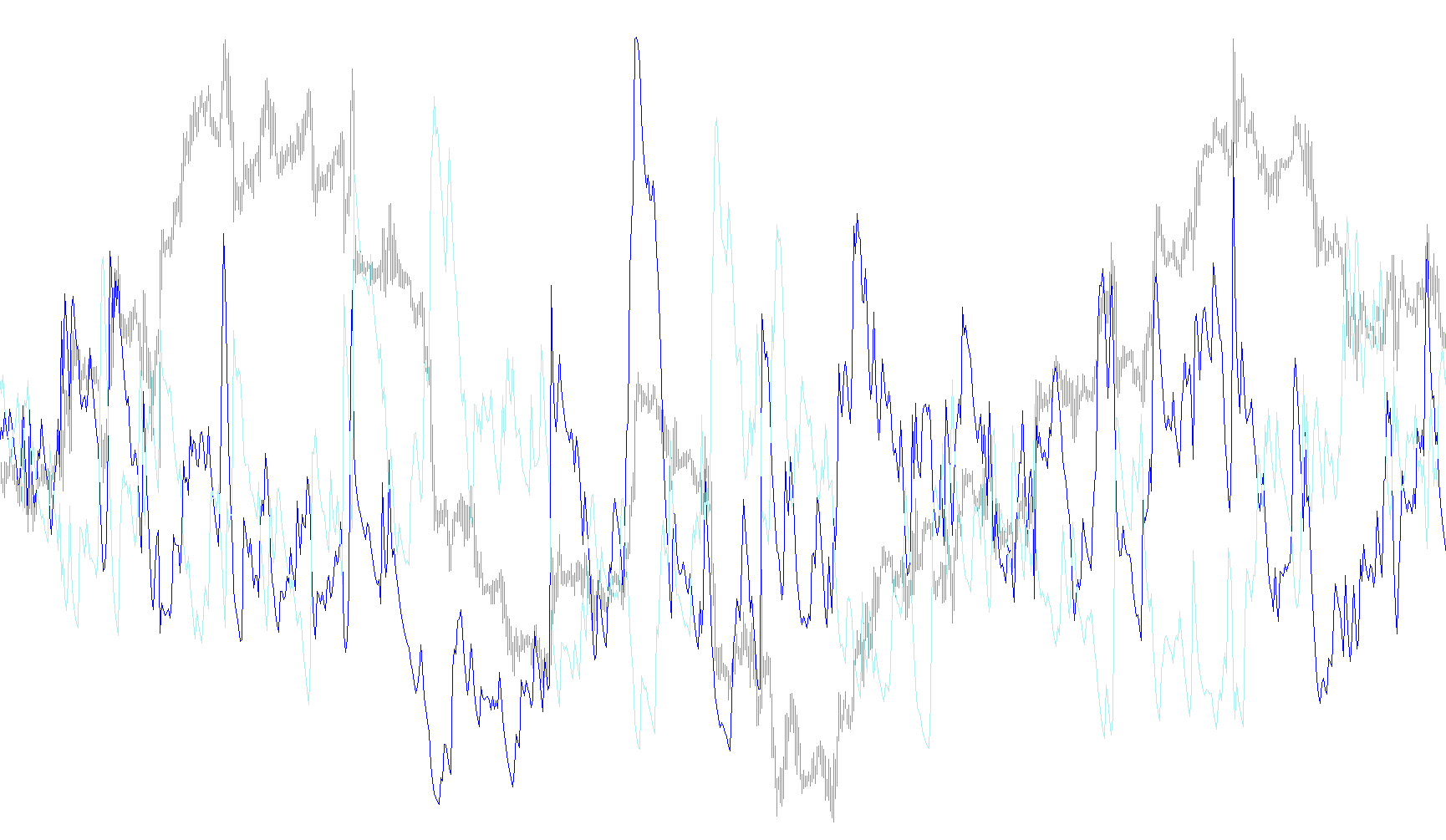
This script is a technical analysis tool designed to help traders measure the strength and direction of price movements in the financial markets. It utilizes a sophisticated version of the Directional Movement Index (DMI) and the Average Directional Index (ADX), specifically incorporating "Wilder’s Smoothing" logic. Unlike standard indicators that might react too quickly or too slowly to price changes, this script uses a specialized smoothing technique to provide a more balanced view of market trends.
Core Logic and Functionality
1. Trend Identification (Bulls vs. Bears) The core of the script begins by analyzing the relationship between current high and low prices compared to previous periods. It identifies "Bullish" movement (upward pressure) and "Bearish" movement (downward pressure). By calculating these two forces, the tool can determine which side of the market is currently exerting more influence.
2. Dynamic Smoothing (Wilder’s Method) Instead of simply taking a raw average, the script applies a recursive smoothing formula. This means that each new data point is influenced by the previous smoothed value plus a weighted percentage of the current change. This approach filters out "market noise" and prevents the indicator from jumping erratically, making it easier for a trader to see the underlying trend.
3. Directional Indicators (+DI and -DI) The script generates two primary lines:
- +DI (Positive Directional Indicator): Represents the strength of upward momentum.
- -DI (Negative Directional Indicator): Represents the strength of downward momentum. By comparing these two, a trader can visually see whether the market is trending up, down, or moving sideways.
4. Trend Strength (ADX and ADXR) Beyond just showing direction, the script calculates how powerful the current trend actually is:
- ADX: This measures the overall "velocity" or strength of the trend regardless of its direction. If the value is rising, the trend is gaining strength; if it is falling, the trend is weakening.
- ADXR: This is a secondary smoothing layer for the ADX, providing an even more stable view of trend longevity.
Summary for the User
In practical terms, this script allows you to see three things at once on your chart:
- The Direction: Is the market moving up (+DI) or down (-DI)?
- The Intensity: How strong is that move (ADX)?
- The Reliability: Because of the smoothing logic, the lines are designed to be less "jittery," helping you stay in a trade longer by identifying sustained trends rather than temporary price spikes.
//+------------------------------------------------------------------+
//|                                                WildersDMI_v1.mq4 |
//|                           Copyright © 2007, TrendLaboratory Ltd. |
//|            http://finance.groups.yahoo.com/group/TrendLaboratory |
//|                                       E-mail: igorad2004@list.ru |
//+------------------------------------------------------------------+
#property copyright "Copyright © 2007, TrendLaboratory Ltd."
#property link      "http://finance.groups.yahoo.com/group/TrendLaboratory"

#property indicator_separate_window
#property indicator_buffers   4
#property indicator_color1    LightBlue
#property indicator_width1    2
#property indicator_color2    Lime
#property indicator_width2    1
#property indicator_style2    2
#property indicator_color3    Tomato
#property indicator_width3    1
#property indicator_style3    2
#property indicator_color4    Orange
#property indicator_width4    2
#property indicator_level1    20
//---- input parameters
extern int       MA_Length    =  1; // Period of additional smoothing
extern int       DMI_Length   = 14; // Period of DMI
extern int       ADX_Length   = 14; // Period of ADX
extern int       ADXR_Length  = 14; // Period of ADXR
extern int       UseADX       =  0; // Use ADX: 0-off,1-on
extern int       UseADXR      =  0; // Use ADXR: 0-off,1-on
//---- buffers
double ADX[];
double PDI[];
double MDI[];
double ADXR[];
double sPDI[];
double sMDI[];
double STR[];
double DX[];

//+------------------------------------------------------------------+
//| Custom indicator initialization function                         |
//+------------------------------------------------------------------+
int init()
{
//---- indicators
   IndicatorBuffers(8);
   SetIndexStyle(0,DRAW_LINE);
   SetIndexBuffer(0,ADX);
   SetIndexStyle(1,DRAW_LINE);
   SetIndexBuffer(1,PDI);
   SetIndexStyle(2,DRAW_LINE);
   SetIndexBuffer(2,MDI);
   SetIndexStyle(3,DRAW_LINE);
   SetIndexBuffer(3,ADXR);
   SetIndexBuffer(4,sPDI);
   SetIndexBuffer(5,sMDI);
   SetIndexBuffer(6,STR);
   SetIndexBuffer(7,DX);
   //---- name for DataWindow and indicator subwindow label
   string short_name="WildersDMI("+MA_Length+","+DMI_Length+","+ADX_Length+","+ADXR_Length+")";
   IndicatorShortName(short_name);
   SetIndexLabel(0,"ADX");
   SetIndexLabel(1,"+DI");
   SetIndexLabel(2,"-DI");
   SetIndexLabel(3,"ADXR");
//----
   SetIndexDrawBegin(0,DMI_Length+MA_Length);
   SetIndexDrawBegin(1,DMI_Length+MA_Length);
   SetIndexDrawBegin(2,DMI_Length+MA_Length);
   SetIndexDrawBegin(3,DMI_Length+MA_Length);

   return(0);
}

//+------------------------------------------------------------------+
//| Custom indicator iteration function                              |
//+------------------------------------------------------------------+
int start()
  {
   int      shift, limit, counted_bars=IndicatorCounted();
   double alfa1 = 1.0/DMI_Length;
   double alfa2 = 1.0/ADX_Length;
//----
   if (counted_bars < 0) return(-1);

   if(counted_bars<1)
      for(shift=1;shift<=MA_Length+DMI_Length;shift++)
      {PDI[Bars-shift]=0.0;MDI[Bars-shift]=0.0;ADX[Bars-shift]=0.0;
      sPDI[Bars-shift]=0.0;sMDI[Bars-shift]=0.0;DX[Bars-shift]=0.0;
      STR[Bars-shift]=0.0;ADXR[Bars-shift]=0.0;}

   shift=Bars-MA_Length-DMI_Length-1;
   if(counted_bars>=DMI_Length+MA_Length) shift=Bars-counted_bars-1;

   while(shift>=0)
   {
   double AvgHigh  = iMA(NULL,0,MA_Length,0,1,PRICE_HIGH,shift);
   double AvgHigh1 = iMA(NULL,0,MA_Length,0,1,PRICE_HIGH,shift+1);
   double AvgLow   = iMA(NULL,0,MA_Length,0,1,PRICE_LOW,shift);
   double AvgLow1  = iMA(NULL,0,MA_Length,0,1,PRICE_LOW,shift+1);
   double AvgClose1= iMA(NULL,0,MA_Length,0,1,PRICE_CLOSE,shift+1);

   double Bulls = 0.5*(MathAbs(AvgHigh-AvgHigh1)+(AvgHigh-AvgHigh1));
   double Bears = 0.5*(MathAbs(AvgLow1-AvgLow)+(AvgLow1-AvgLow));

   if (Bulls > Bears) Bears = 0;
   else
   if (Bulls < Bears) Bulls = 0;
   else
   if (Bulls == Bears) {Bulls = 0;Bears = 0;}

   sPDI[shift] = sPDI[shift+1] + alfa1 * (Bulls - sPDI[shift+1]);
   sMDI[shift] = sMDI[shift+1] + alfa1 * (Bears - sMDI[shift+1]);

   double   TR = MathMax(AvgHigh-AvgLow,AvgHigh-AvgClose1);
   STR[shift]  = STR[shift+1] + alfa1 * (TR - STR[shift+1]);

      if(STR[shift]>0 )
      {
      PDI[shift] = 100*sPDI[shift]/STR[shift];
      MDI[shift] = 100*sMDI[shift]/STR[shift];
      }

      if( UseADX > 0)
      {
      if((PDI[shift] + MDI[shift])>0)
      DX[shift] = 100*MathAbs(PDI[shift] - MDI[shift])/(PDI[shift] + MDI[shift]);
      else DX[shift] = 0;

      ADX[shift] = ADX[shift+1] + alfa2 * ( DX[shift] - ADX[shift+1]);

      if(UseADXR >0) ADXR[shift] = 0.5*(ADX[shift] + ADX[shift+ADXR_Length]);
      }
   shift--;
   }

//----
   return(0);
  }
//+------------------------------------------------------------------+
Comments