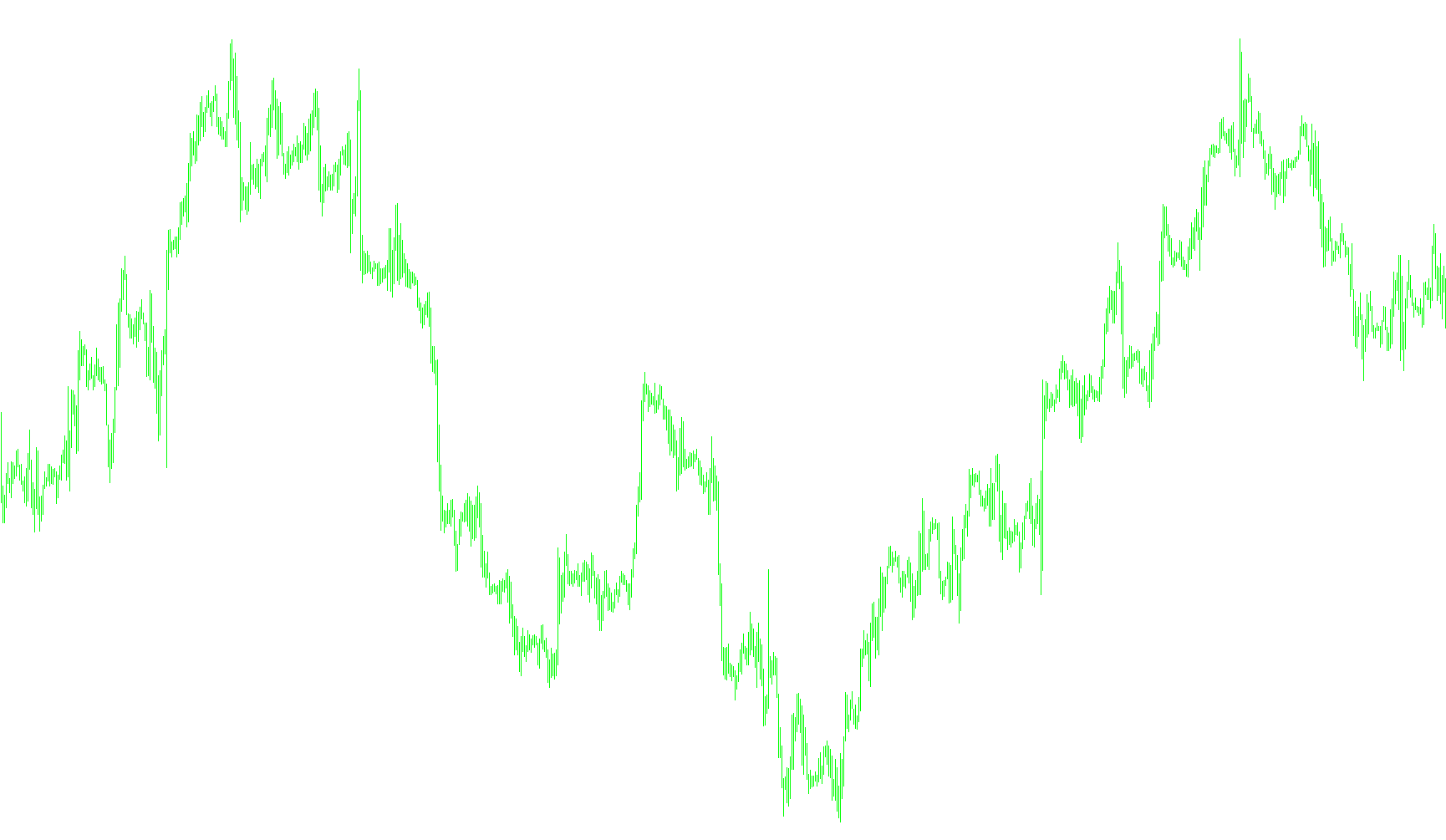
The StepChoppy indicator is a visual trading tool designed to help market participants identify the current "mood" or strength of a market trend. Instead of simply showing whether the price is moving up or down, it categorizes the quality of that movement into eight distinct stages, represented by different colored histograms in a separate window below the main chart.
How the Logic Works
The indicator functions by combining two primary types of technical analysis: Trend Identification and Momentum Analysis.
- Trend Filtering: The script first looks at moving averages to establish the broad direction of the market. It specifically identifies whether the current price action aligns with a general upward trend or a general downward trend.
- Momentum Comparison: Simultaneously, the script analyzes "Relative Strength" (momentum). It compares three different speed layers of momentum:
- A standard measure of current strength.
- A "Fast" momentum tracker (sensitive to immediate price flickers).
- A "Slow" momentum tracker (focused on broader movement).
The Eight Market States
By comparing these trend and momentum data points against one another, the script determines which of the following eight states the market is in:
Upward Trend States:
- Strong UpTrend: High-momentum price action moving aggressively upward.
- Retrace UpTrend: A slight cooling off or "breather" within an overall upward move.
- Choppy UpTrend: Weak, inconsistent upward movement where the market is struggling to maintain direction.
- Ready to Change UpTrend: A warning signal indicating that the upward momentum is losing its grip and a reversal may be coming.
Downward Trend States:
- Strong DownTrend: High-momentum price action moving aggressively downward.
- Retrace DownTrend: A slight "bounce" or recovery within an overall downward move.
- Choppy DownTrend: Weak, inconsistent downward movement where the market is struggling to maintain direction.
- Ready to Change DownTrend: A warning signal indicating that the downward momentum is losing its grip and a reversal may be coming.
User Benefit
For a trader, this logic simplifies complex data into an easy-to-read visual guide. Rather than guessing if a move is "healthy" or "exhausted," the indicator uses color-coded histograms to tell you exactly where the market stands—helping you distinguish between a powerful move that is safe to trade and a "choppy" move that might be high-risk.
/*-----------------------------+
|			       |
| Shared by www.Aptrafx.com    |
|			       |
+------------------------------*/

//+------------------------------------------------------------------+
//|                                                StepChoppy_v1.mq4 |
//|                                  Copyright © 2006, Forex-TSD.com |
//|                         Written by IgorAD,igorad2003@yahoo.co.uk |
//|            http://finance.groups.yahoo.com/group/TrendLaboratory |
//+------------------------------------------------------------------+
#property copyright "Copyright © 2006, Forex-TSD.com "
#property link      "http://www.forex-tsd.com/"

#property indicator_separate_window
#property indicator_minimum -0.05
#property indicator_maximum 1.05
#property indicator_buffers 8

extern string step_ma = "StepMA_v7a";
//---- input parameters
int Length=10;
double StepSizeFast=5;
double StepSizeSlow=15;
int MAPeriod=1;
int Price=0;
int Mode=2;
//---- buffers
double UpBuffer1[];
double UpBuffer2[];
double UpBuffer3[];
double UpBuffer4[];

double DnBuffer1[];
double DnBuffer2[];
double DnBuffer3[];
double DnBuffer4[];

//+------------------------------------------------------------------+
//| Custom indicator initialization function                         |
//+------------------------------------------------------------------+
int init()
  {

//----
   SetIndexStyle(0,DRAW_HISTOGRAM,0,3,MediumBlue);
   SetIndexStyle(1,DRAW_HISTOGRAM,0,3,DodgerBlue);
   SetIndexStyle(2,DRAW_HISTOGRAM,0,3,LightBlue);
   SetIndexStyle(3,DRAW_HISTOGRAM,0,3,Aqua);

   SetIndexStyle(4,DRAW_HISTOGRAM,0,3,Crimson);
   SetIndexStyle(5,DRAW_HISTOGRAM,0,3,Tomato);
   SetIndexStyle(6,DRAW_HISTOGRAM,0,3,Orange);
   SetIndexStyle(7,DRAW_HISTOGRAM,0,3,Yellow);

   SetIndexBuffer(0,UpBuffer1);
   SetIndexBuffer(1,UpBuffer2);
   SetIndexBuffer(2,UpBuffer3);
   SetIndexBuffer(3,UpBuffer4);

   SetIndexBuffer(4,DnBuffer1);
   SetIndexBuffer(5,DnBuffer2);
   SetIndexBuffer(6,DnBuffer3);
   SetIndexBuffer(7,DnBuffer4);

//----
   string short_name="StepChoppy";
   IndicatorShortName(short_name);
   SetIndexLabel(0,"Strong UpTrend");
   SetIndexLabel(1,"Retrace UpTrend");
   SetIndexLabel(2,"Choppy UpTrend");
   SetIndexLabel(3,"Be ready to change UpTrend");

   SetIndexLabel(4,"Strong DownTrend");
   SetIndexLabel(5,"Retrace DownTrend");
   SetIndexLabel(6,"Choppy DownTrend");
   SetIndexLabel(7,"Be ready to change DownTrend");
//----

   SetIndexDrawBegin(0,Length);
   SetIndexDrawBegin(1,Length);
   SetIndexDrawBegin(2,Length);
   SetIndexDrawBegin(3,Length);
   SetIndexDrawBegin(4,Length);
   SetIndexDrawBegin(5,Length);
   SetIndexDrawBegin(6,Length);
   SetIndexDrawBegin(7,Length);
//----
   return(0);
  }
//+------------------------------------------------------------------+
//| StepChoppy_v1                                                       |
//+------------------------------------------------------------------+
int start()
  {
   int  i,counted_bars=IndicatorCounted();
   double RSI, FastRSI, SlowRSI, StepMA, UpTrendMA, DnTrendMA;
//----
   if(Bars<=Length) return(0);
//---- initial zero
   if(counted_bars<1)
      for(i=1;i<=Length;i++)
      {
      UpBuffer1[Bars-i]=0.0;
      UpBuffer2[Bars-i]=0.0;
      UpBuffer3[Bars-i]=0.0;
      UpBuffer4[Bars-i]=0.0;

      DnBuffer1[Bars-i]=0.0;
      DnBuffer2[Bars-i]=0.0;
      DnBuffer3[Bars-i]=0.0;
      DnBuffer4[Bars-i]=0.0;
      }
//----
   if ( counted_bars > 0 )  int limit=Bars-counted_bars;
   if ( counted_bars ==0 )  limit=Bars-Length-1;

   for(i=limit;i>=0;i--)
   {

   UpTrendMA = iCustom(NULL,0,step_ma,Length,1.0,0,0,0,0,true,2,0,1,i);
   DnTrendMA = iCustom(NULL,0,step_ma,Length,1.0,0,0,0,0,true,2,0,2,i);

   RSI=iCustom(NULL,0,"StepRSI_v5.2",Length,StepSizeFast,MAPeriod,Price,Mode,0,i);
   FastRSI=iCustom(NULL,0,"StepRSI_v5.2",Length,StepSizeFast,MAPeriod,Price,Mode,1,i);
   SlowRSI=iCustom(NULL,0,"StepRSI_v5.2",Length,StepSizeSlow,MAPeriod,Price,Mode,1,i);

   UpBuffer1[i] =UpBuffer1[i+1];
   UpBuffer2[i] =UpBuffer2[i+1];
   UpBuffer3[i] =UpBuffer3[i+1];
   UpBuffer4[i] =UpBuffer4[i+1];

   DnBuffer1[i] =DnBuffer1[i+1];
   DnBuffer2[i] =DnBuffer2[i+1];
   DnBuffer3[i] =DnBuffer3[i+1];
   DnBuffer4[i] =DnBuffer4[i+1];

   if (FastRSI > SlowRSI && RSI > FastRSI && UpTrendMA!=EMPTY_VALUE)
   {UpBuffer1[i] = 1.0;UpBuffer2[i] = 0.0;UpBuffer3[i] = 0.0;UpBuffer4[i] = 0.0;
    DnBuffer1[i] = 0.0;DnBuffer2[i] = 0.0;DnBuffer3[i] = 0.0;DnBuffer4[i] = 0.0;}

   else if (FastRSI > SlowRSI && RSI < FastRSI && UpTrendMA!=EMPTY_VALUE)
   {UpBuffer1[i] = 0.0;UpBuffer2[i] = 1.0;UpBuffer3[i] = 0.0;UpBuffer4[i] = 0.0;
    DnBuffer1[i] = 0.0;DnBuffer2[i] = 0.0;DnBuffer3[i] = 0.0;DnBuffer4[i] = 0.0;}

   else if (FastRSI < SlowRSI && RSI > FastRSI && UpTrendMA!=EMPTY_VALUE)
   {UpBuffer1[i] = 0.0;UpBuffer2[i] = 0.0;UpBuffer3[i] = 1.0;UpBuffer4[i] = 0.0;
    DnBuffer1[i] = 0.0;DnBuffer2[i] = 0.0;DnBuffer3[i] = 0.0;DnBuffer4[i] = 0.0;}

   else if (FastRSI < SlowRSI && RSI < FastRSI && UpTrendMA!=EMPTY_VALUE)
   {UpBuffer1[i] = 0.0;UpBuffer2[i] = 0.0;UpBuffer3[i] = 0.0;UpBuffer4[i] = 1.0;
    DnBuffer1[i] = 0.0;DnBuffer2[i] = 0.0;DnBuffer3[i] = 0.0;DnBuffer4[i] = 0.0;}


   else if (FastRSI < SlowRSI && RSI < FastRSI && DnTrendMA!=EMPTY_VALUE)
   {UpBuffer1[i] = 0.0;UpBuffer2[i] = 0.0;UpBuffer3[i] = 0.0;UpBuffer4[i] = 0.0;
    DnBuffer1[i] = 1.0;DnBuffer2[i] = 0.0;DnBuffer3[i] = 0.0;DnBuffer4[i] = 0.0;}

   else if (FastRSI < SlowRSI && RSI > FastRSI && DnTrendMA!=EMPTY_VALUE)
   {UpBuffer1[i] = 0.0;UpBuffer2[i] = 0.0;UpBuffer3[i] = 0.0;UpBuffer4[i] = 0.0;
    DnBuffer1[i] = 0.0;DnBuffer2[i] = 1.0;DnBuffer3[i] = 0.0;DnBuffer4[i] = 0.0;}

   else if (FastRSI > SlowRSI && RSI < FastRSI && DnTrendMA!=EMPTY_VALUE)
   {UpBuffer1[i] = 0.0;UpBuffer2[i] = 0.0;UpBuffer3[i] = 0.0;UpBuffer4[i] = 0.0;
    DnBuffer1[i] = 0.0;DnBuffer2[i] = 0.0;DnBuffer3[i] = 1.0;DnBuffer4[i] = 0.0;}

   else if (FastRSI > SlowRSI && RSI > FastRSI && DnTrendMA!=EMPTY_VALUE)
   {UpBuffer1[i] = 0.0;UpBuffer2[i] = 0.0;UpBuffer3[i] = 0.0;UpBuffer4[i] = 0.0;
    DnBuffer1[i] = 0.0;DnBuffer2[i] = 0.0;DnBuffer3[i] = 0.0;DnBuffer4[i] = 1.0;}
   }

//----
   return(0);
  }
//+------------------------------------------------------------------+
Comments