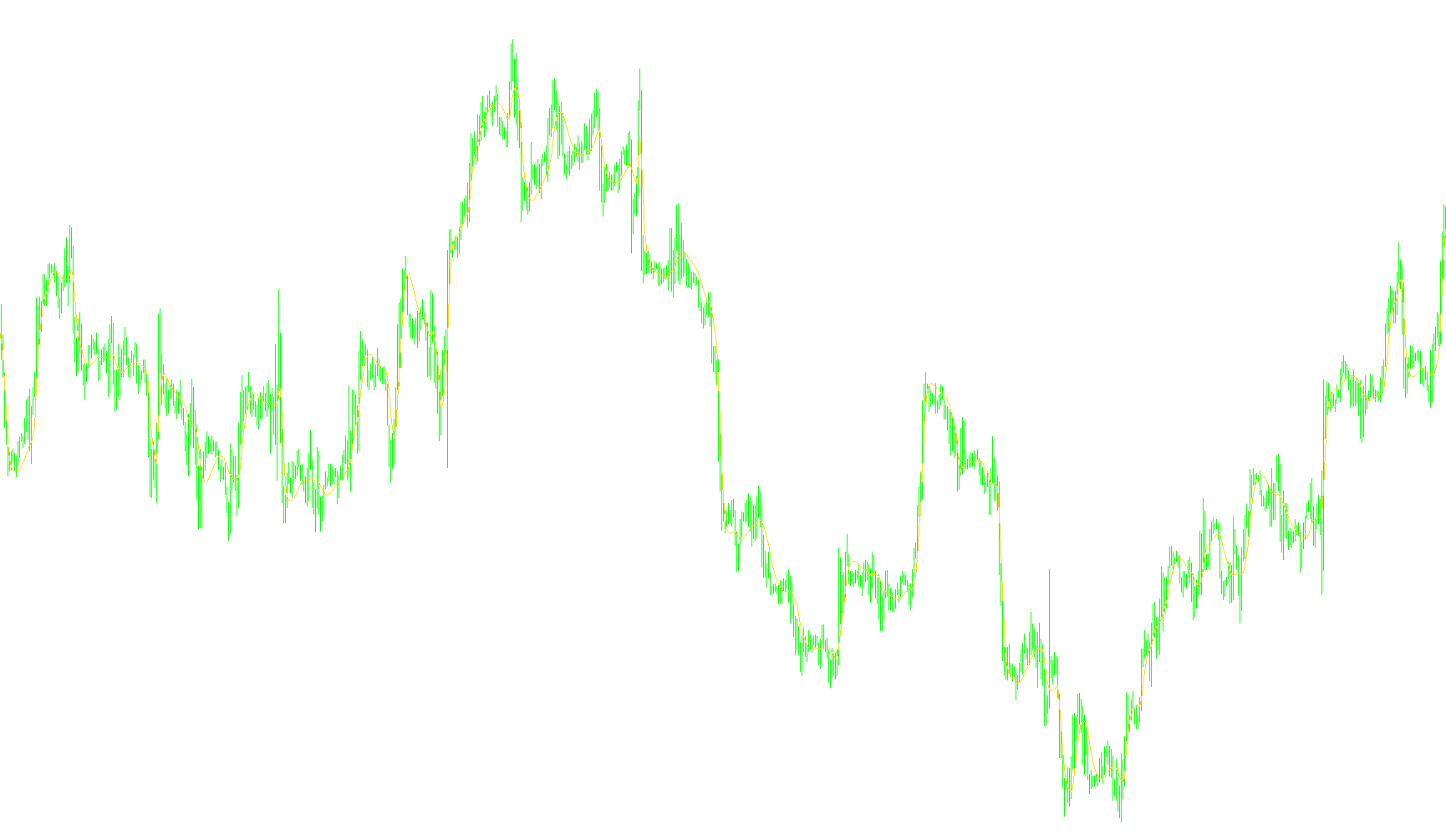
This script implements a sophisticated technical analysis indicator known as the Jurik Moving Average (JMA). From a user's perspective, the primary goal of this logic is to create a "smooth" price line that identifies trends while significantly reducing the "lag"—the delay between a market move and the indicator's reaction—which is a common flaw in standard moving averages.
Core Logic Overview
The script operates by blending several complex mathematical layers to achieve a balance between stability (smoothness) and responsiveness (speed). Here is how it processes data:
1. Adaptive Dynamic Filtering Instead of using a fixed calculation for every price point, the script analyzes the volatility and "noise" of the current market. It identifies whether the price is moving in a steady trend or fluctuating wildly. By calculating the distance between current prices and historical averages, it adjusts how much weight to give to new information versus old information.
2. Non-Linear Smoothing The logic uses logarithmic and square root calculations to determine "power values." This means the indicator doesn't treat a 1% price move the same way as a 5% price move; it attempts to scale its sensitivity based on the intensity of the market action. This helps the indicator stay "flat" during minor noise but react quickly when a significant breakout occurs.
3. Multi-Stage Processing (The "Big Cycle") The script doesn't just look at the most recent price. It runs an internal loop that performs several passes:
- Distance Analysis: It measures how far current prices are from a set of reference points.
- Volatility Tracking: It keeps a running tally of these distances to determine the current "momentum" of the market.
- Trend Verification: It uses a sorting and counting method to ensure that the direction it is following is a genuine trend and not just a momentary spike.
4. Phase and Length Customization The logic includes specific parameters for "Length" and "Phase":
- Length: Determines the overall window of time the indicator considers (similar to a period in a standard moving average).
- Phase: This is a unique characteristic of the Jurik JMA. It allows the user to fine-tune the "responsiveness." A higher phase generally makes the indicator more reactive to sudden changes, while a lower phase prioritizes a smoother, slower line.
5. Final Integration In the final step, the script takes all these calculations—the smoothed price, the volatility adjustments, and the trend verification—and merges them into a single final value. This result is what you see as the smooth Aqua-colored line on your chart.
Summary for the User
In plain English, this script is designed to be "smart." It looks at the market, senses how fast or slow it is moving, and adjusts its own math in real-time to try and show you the cleanest possible trend line without the typical delays seen in standard tools.
//+------------------------------------------------------------------+
//|                                                          JMA.mq4 |
//|                                             Weld, Jurik Research |
//|                                          http://weld.torguem.net |
//+------------------------------------------------------------------+
#property copyright "Weld"
#property link      "http://weld.torguem.net"

#property indicator_chart_window
#property indicator_buffers 1
#property indicator_color1 Aqua
//---- input parameters
extern int       Length = 14;
extern int       Phase  = 0;
//---- buffers
double JMAValueBuffer [];
double fC0Buffer [];
double fA8Buffer [];
double fC8Buffer [];
//---- temporary buffers
double list[128], ring1[128], ring2[11], buffer[62];
//---- bool flag
bool   initFlag;
//---- integer vars
int    limitValue, startValue, loopParam, loopCriteria;
int    cycleLimit, highLimit, counterA, counterB;
//---- double vars
double cycleDelta, lowDValue, highDValue, absValue, paramA, paramB;
double phaseParam, logParam, JMAValue, series, sValue, sqrtParam, lengthDivider;
//---- temporary int variables
int   s58, s60, s40, s38, s68;
//+------------------------------------------------------------------+
//| JMA initFlagization function                                     |
//+------------------------------------------------------------------+
int init()
  {
   double   lengthParam;
//---- 3 additional buffers are used for counting.
   IndicatorBuffers(4);
//---- drawing settings
   SetIndexStyle  (0, DRAW_LINE);
   SetIndexDrawBegin(0, 30);
//---- 4 indicator buffers mapping
   SetIndexBuffer (0, JMAValueBuffer);
   SetIndexBuffer (1, fC0Buffer);
   SetIndexBuffer (2, fA8Buffer);
   SetIndexBuffer (3, fC8Buffer);
//---- initialize one buffer (neccessary)
   ArrayInitialize (ring2, 0);
   ArrayInitialize (ring1, 0);
   ArrayInitialize (buffer, 0);
//---- name for DataWindow and indicator subwindow label
   IndicatorShortName ("JMAValue(" + Length + "," + Phase + ")");
   SetIndexLabel (0, "JMAValue");
//---- initial part
   limitValue = 63;
   startValue = 64;
//----
   for (int i = 0; i <= limitValue; i++) list [i] = -1000000;
   for (i = startValue; i <= 127; i++)   list [i] = 1000000;
//----
   initFlag  = true;
   if (Length < 1.0000000002) lengthParam = 0.0000000001;
   else lengthParam = (Length - 1) / 2.0;
//----
   if (Phase < -100) phaseParam = 0.5;
   else if (Phase > 100) phaseParam = 2.5;
   else phaseParam = Phase / 100.0 + 1.5;
//----
   logParam = MathLog (MathSqrt (lengthParam)) / MathLog (2.0);
//----
   if (logParam + 2.0 < 0) logParam = 0;
   else logParam = logParam + 2.0;
//----
   sqrtParam     = MathSqrt(lengthParam) * logParam;
   lengthParam   = lengthParam * 0.9;
   lengthDivider = lengthParam / (lengthParam + 2.0);
//----
   return;
}
//+------------------------------------------------------------------+
//| JMA iteration function                                           |
//+------------------------------------------------------------------+
int start()
  {

//---- get already counted bars
   int counted_bars = IndicatorCounted();
//---- check for possible errors
   if (counted_bars < 0) return (-1);
   int limit = Bars - counted_bars - 1;
//---- main cycle
   for (int shift = limit; shift >= 0; shift--) {
      series = Close [shift];

      if (loopParam < 61) {
         loopParam++;
         buffer [loopParam] = series;
      }
      if (loopParam > 30) {
         if (initFlag) {
            initFlag = false;

            int diffFlag = 0;
            for (int i = 1; i <= 29; i++) {
               if (buffer [i + 1] != buffer [i]) diffFlag = 1;
            }
            highLimit = diffFlag * 30;

            if (highLimit == 0) paramB = series;
            else paramB = buffer[1];

            paramA = paramB;
            if (highLimit > 29) highLimit = 29;
         } else
            highLimit = 0;
//---- big cycle
         for (i = highLimit; i >= 0; i--) {
			   if (i == 0) sValue = series; else sValue = buffer [31 - i];

			   if (MathAbs (sValue - paramA) > MathAbs (sValue - paramB)) absValue = MathAbs(sValue - paramA); else absValue = MathAbs(sValue - paramB);
			   double dValue = absValue + 0.0000000001; //1.0e-10;

			   if (counterA <= 1) counterA = 127; else counterA--;
			   if (counterB <= 1) counterB = 10;  else counterB--;
			   if (cycleLimit < 128) cycleLimit++;
			   cycleDelta += (dValue - ring2 [counterB]);
			   ring2 [counterB] = dValue;
			   if (cycleLimit > 10) highDValue = cycleDelta / 10.0; else highDValue = cycleDelta / cycleLimit;

			   if (cycleLimit > 127) {
				   dValue = ring1 [counterA];
				   ring1 [counterA] = highDValue;
				   s68 = 64; s58 = s68;
				   while (s68 > 1) {
					   if (list [s58] < dValue) {
						   s68 = s68 / 2.0;
						   s58 += s68;
					   } else
					   if (list [s58] <= dValue) {
						   s68 = 1;
					   } else {
						   s68 = s68 / 2.0;
						   s58 -= s68;
					   }
               }
            } else {
			      ring1 [counterA] = highDValue;
			      if ((limitValue + startValue) > 127) {
				      startValue--;
				      s58 = startValue;
			      } else {
				      limitValue++;
				      s58 = limitValue;
			      }
			      if (limitValue > 96) s38 = 96; else s38 = limitValue;
			      if (startValue < 32) s40 = 32; else s40 = startValue;
		      }
//----
		      s68 = 64;
		      s60 = s68;
		      while (s68 > 1) {
			      if (list [s60] >= highDValue) {
				      if (list [s60 - 1] <= highDValue) {
					      s68 = 1;
				      }
				      else {
					      s68 = s68 / 2.0;
					      s60 -= s68;
				      }
			      }
			      else {
				      s68 = s68 / 2.0;
				      s60 += s68;
			      }
			      if ((s60 == 127) && (highDValue > list[127])) s60 = 128;
		      }
			   if (cycleLimit > 127) {
				   if (s58 >= s60) {
					   if (((s38 + 1) > s60) && ((s40 - 1) < s60))
						    lowDValue += highDValue;
					   else if ((s40 > s60) && ((s40 - 1) < s58))
						    lowDValue += list [s40 - 1];
				   }
				   else if (s40 >= s60) {
					   if (((s38 + 1) < s60) && ((s38 + 1) > s58))
							    lowDValue += list[s38 + 1];
					}
				   else if ((s38 + 2) > s60)
						   lowDValue += highDValue;
				   else if (((s38 + 1) < s60) && ((s38 + 1) > s58))
						   lowDValue += list[s38 + 1];

				   if (s58 > s60) {
					   if (((s40 - 1) < s58) && ((s38 + 1) > s58))
						   lowDValue -= list [s58];
					   else if ((s38 < s58) && ((s38 + 1) > s60))
						   lowDValue -= list [s38];
				   }
				   else {
					   if (((s38 + 1) > s58) && ((s40 - 1) < s58))
						   lowDValue -= list [s58];
					   else if ((s40 > s58) && (s40 < s60))
						   lowDValue -= list [s40];
				   }
			   }
			   if (s58 <= s60) {
				   if (s58 >= s60) list[s60] = highDValue; else {
					   for (int j = s58 + 1; j <= (s60 - 1); j++) {
						   list [j - 1] = list[j];
					   }
					   list [s60 - 1] = highDValue;
				   }
			   } else {
				   for (j = s58 - 1; j >= s60; j--) {
					   list [j + 1] = list [j];
				   }
				   list [s60] = highDValue;
			   }

			   if (cycleLimit <= 127) {
				   lowDValue = 0;
				   for (j = s40; j <= s38; j++) {
					   lowDValue += list[j];
				   }
			   }
//----
			   if ((loopCriteria + 1) > 31) loopCriteria = 31; else loopCriteria++;
			   double JMATempValue, sqrtDivider = sqrtParam / (sqrtParam + 1.0);

			   if (loopCriteria <= 30) {
				   if (sValue - paramA > 0) paramA = sValue; else paramA = sValue - (sValue - paramA) * sqrtDivider;
				   if (sValue - paramB < 0) paramB = sValue; else paramB = sValue - (sValue - paramB) * sqrtDivider;
				   JMATempValue = series;

				   if (loopCriteria == 30) {
				     fC0Buffer [shift] = series;
				     int intPart;

				     if (MathCeil(sqrtParam) >= 1) intPart = MathCeil(sqrtParam); else intPart = 1;
				     int leftInt = IntPortion (intPart);
				     if (MathFloor(sqrtParam) >= 1) intPart = MathFloor(sqrtParam); else intPart = 1;
				     int rightPart = IntPortion (intPart);

				     if (leftInt == rightPart) dValue = 1.0;
				     else
					     dValue = (sqrtParam - rightPart) / (leftInt - rightPart);

				     if (rightPart <= 29) int upShift = rightPart; else upShift = 29;
				     if (leftInt <= 29) int dnShift = leftInt; else dnShift = 29;
				     fA8Buffer [shift] = (series - buffer [loopParam - upShift]) * (1 - dValue) / rightPart + (series - buffer[loopParam - dnShift]) * dValue / leftInt;
               }
			   } else {
			      double powerValue, squareValue;

			      dValue = lowDValue / (s38 - s40 + 1);
			      if (0.5 <= logParam - 2.0) powerValue = logParam - 2.0;
               else powerValue = 0.5;

				   if (logParam >= MathPow(absValue/dValue, powerValue)) dValue = MathPow (absValue/dValue, powerValue); else dValue = logParam;
				   if (dValue < 1) dValue = 1;

				   powerValue = MathPow (sqrtDivider, MathSqrt (dValue));
				   if (sValue - paramA > 0) paramA = sValue; else paramA = sValue - (sValue - paramA) * powerValue;
				   if (sValue - paramB < 0) paramB = sValue; else paramB = sValue - (sValue - paramB) * powerValue;
   		   }
         }
// ---- end of big cycle
         if (loopCriteria > 30) {
				JMATempValue = JMAValueBuffer [shift + 1];
            powerValue   = MathPow (lengthDivider, dValue);
            squareValue  = MathPow (powerValue, 2);

				fC0Buffer [shift] = (1 - powerValue) * series + powerValue * fC0Buffer [shift + 1];
            fC8Buffer [shift] = (series - fC0Buffer [shift]) * (1 - lengthDivider) + lengthDivider * fC8Buffer [shift + 1];

            fA8Buffer [shift] = (phaseParam * fC8Buffer [shift] + fC0Buffer [shift] - JMATempValue) *
                                 (powerValue * (-2.0) + squareValue + 1) + squareValue * fA8Buffer [shift + 1];
            JMATempValue += fA8Buffer [shift];
         }
         JMAValue = JMATempValue;
      }
      if (loopParam <= 30) JMAValue = 0;
      JMAValueBuffer [shift] = JMAValue;
//---- End of main cycle
   }
   return;
}

//+------------------------------------------------------------------+
int IntPortion (double param) {
   if (param > 0) return (MathFloor (param));
   if (param < 0) return (MathCeil (param));
   return (0.0);
}
//+------------------------------------------------------------------+
Comments