JMA
Download script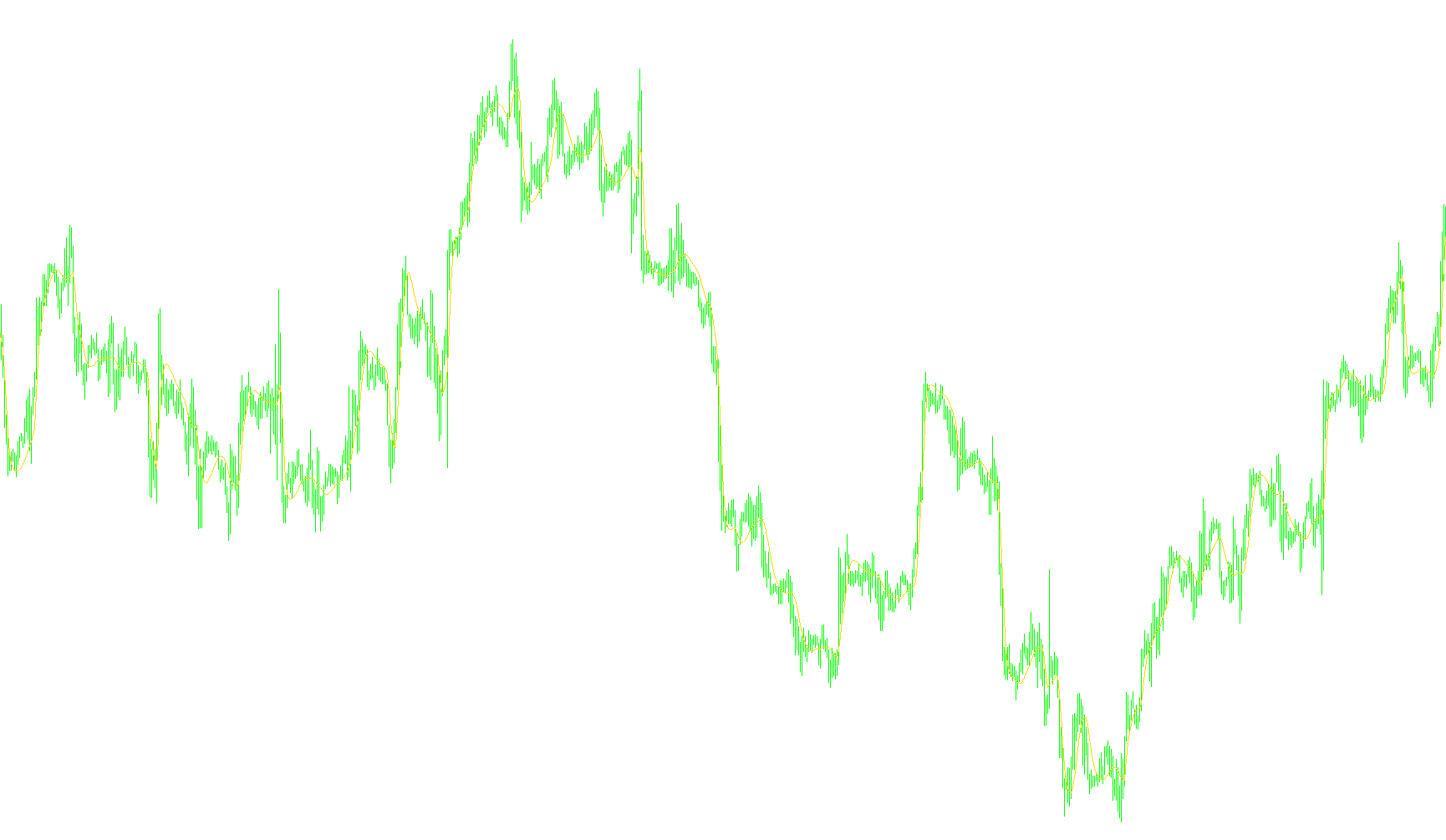
This script introduces the Turbo JMA (Jurik Moving Average) to your trading charts. It is designed to provide a smoother, more responsive trend-following line compared to standard moving averages by utilizing advanced mathematical filtering.
Here is a breakdown of how the logic works in plain English:
Core Purpose
The primary goal of this script is to solve a common problem in trading: the "lag" vs. "smoothness" trade-off. Most indicators are either very smooth but react too slowly to price changes, or they react quickly but are too "noisy" and jumpy. The Turbo JMA uses complex internal calculations to minimize both of these issues simultaneously.
How it Processes Data
Instead of simply averaging the last few prices (like a Simple Moving Average), this script follows a sophisticated multi-step process:
- Price Input: It specifically looks at the "Typical Price," which is the average of the High, Low, and Close prices for each candle. This provides a more balanced view of market activity than using just the closing price.
- Dynamic Weighting: The script uses a "Phase" and "Length" setting to determine how it should prioritize recent data versus older data. It creates a weighted system that allows the line to "bend" more naturally with the market trend.
- Signal Filtering: It employs an internal loop that calculates price deviations. By measuring how much the current price varies from previous values, it can distinguish between genuine trend shifts and minor market noise (volatility).
- Smoothing Layers: The logic applies multiple layers of mathematical "folding." Think of this like a series of filters: as the raw price enters the script, it is smoothed, then adjusted for momentum, and finally refined to ensure the resulting line is sleek.
Key Technical Behaviors
- Trend Adaptation: Because of its unique math, the indicator is designed to stay very close to the price during strong trends while remaining exceptionally flat during sideways (choppy) markets.
- Reduced Lag: It utilizes a specific calculation style that "anticipates" the curve of the price slightly better than standard moving averages, aiming to provide entry and exit signals faster without sacrificing the cleanliness of the line.
- Stability: The script includes safeguards to ensure that when the indicator starts up (initialization), it doesn't produce erratic jumps or errors, ensuring a consistent visual experience from the very first candle on your chart.
Summary for the User
In short, this is a high-performance smoothing tool. It takes messy market data and converts it into a clean, "turbo" charged trend line that reacts quickly to new information but ignores the "static" of minor price fluctuations. It is ideal for traders who need to see the clear direction of the market without being distracted by constant, jagged movements.
//+------------------------------------------------------------------+
//|                                                    Turbo_JMA.mq4 |
//|                                             Weld, Jurik Research |
//|                   Modified by bluto to use Typical Price (HLC/3) |
//|                                          http://weld.torguem.net |
//+------------------------------------------------------------------+
#property copyright "Weld"
#property link      "http://weld.torguem.net"

#property indicator_chart_window
#property indicator_buffers 1
#property indicator_color1 Aqua
//---- input parameters
extern int       Length = 14;
extern int       Phase  = 0;
//---- buffers
double JMAValueBuffer [];
double fC0Buffer [];
double fA8Buffer [];
double fC8Buffer [];
//---- temporary buffers
double list[128], ring1[128], ring2[11], buffer[62];
//---- bool flag
bool   initFlag;
//---- integer vars
int    limitValue, startValue, loopParam, loopCriteria;
int    cycleLimit, highLimit, counterA, counterB;
//---- double vars
double cycleDelta, lowDValue, highDValue, absValue, paramA, paramB;
double phaseParam, logParam, JMAValue, series, sValue, sqrtParam, lengthDivider;
//---- temporary int variables
int   s58, s60, s40, s38, s68;
//+------------------------------------------------------------------+
//| JMA initFlagization function                                     |
//+------------------------------------------------------------------+
int init()
  {
   double   lengthParam;
//---- 3 additional buffers are used for counting.
   IndicatorBuffers(4);
//---- drawing settings
   SetIndexStyle  (0, DRAW_LINE);
   SetIndexDrawBegin(0, 30);
//---- 4 indicator buffers mapping
   SetIndexBuffer (0, JMAValueBuffer);
   SetIndexBuffer (1, fC0Buffer);
   SetIndexBuffer (2, fA8Buffer);
   SetIndexBuffer (3, fC8Buffer);
//---- initialize one buffer (neccessary)
   ArrayInitialize (ring2, 0);
   ArrayInitialize (ring1, 0);
   ArrayInitialize (buffer, 0);
//---- name for DataWindow and indicator subwindow label
   IndicatorShortName ("Turbo JMA(" + Length + "," + Phase + ")");
   SetIndexLabel (0, "JMAValue");
//---- initial part
   limitValue = 63;
   startValue = 64;
//----
   for (int i = 0; i <= limitValue; i++) list [i] = -1000000;
   for (i = startValue; i <= 127; i++)   list [i] = 1000000;
//----
   initFlag  = true;
   if (Length < 1.0000000002) lengthParam = 0.0000000001;
   else lengthParam = (Length - 1) / 2.0;
//----
   if (Phase < -100) phaseParam = 0.5;
   else if (Phase > 100) phaseParam = 2.5;
   else phaseParam = Phase / 100.0 + 1.5;
//----
   logParam = MathLog (MathSqrt (lengthParam)) / MathLog (2.0);
//----
   if (logParam + 2.0 < 0) logParam = 0;
   else logParam = logParam + 2.0;
//----
   sqrtParam     = MathSqrt(lengthParam) * logParam;
   lengthParam   = lengthParam * 0.9;
   lengthDivider = lengthParam / (lengthParam + 2.0);
//----
   return;
}
//+------------------------------------------------------------------+
//| JMA iteration function                                           |
//+------------------------------------------------------------------+
int start()
  {

//---- get already counted bars
   int counted_bars = IndicatorCounted();
//---- check for possible errors
   if (counted_bars < 0) return (-1);
   int limit = Bars - counted_bars - 1;
//---- main cycle
   for (int shift = limit; shift >= 0; shift--) {
      series = ((High[shift]+Low[shift]+Close[shift])/3);

      if (loopParam < 61) {
         loopParam++;
         buffer [loopParam] = series;
      }
      if (loopParam > 30) {
         if (initFlag) {
            initFlag = false;

            int diffFlag = 0;
            for (int i = 1; i <= 29; i++) {
               if (buffer [i + 1] != buffer [i]) diffFlag = 1;
            }
            highLimit = diffFlag * 30;

            if (highLimit == 0) paramB = series;
            else paramB = buffer[1];

            paramA = paramB;
            if (highLimit > 29) highLimit = 29;
         } else
            highLimit = 0;
//---- big cycle
         for (i = highLimit; i >= 0; i--) {
			   if (i == 0) sValue = series; else sValue = buffer [31 - i];

			   if (MathAbs (sValue - paramA) > MathAbs (sValue - paramB)) absValue = MathAbs(sValue - paramA); else absValue = MathAbs(sValue - paramB);
			   double dValue = absValue + 0.0000000001; //1.0e-10;

			   if (counterA <= 1) counterA = 127; else counterA--;
			   if (counterB <= 1) counterB = 10;  else counterB--;
			   if (cycleLimit < 128) cycleLimit++;
			   cycleDelta += (dValue - ring2 [counterB]);
			   ring2 [counterB] = dValue;
			   if (cycleLimit > 10) highDValue = cycleDelta / 10.0; else highDValue = cycleDelta / cycleLimit;

			   if (cycleLimit > 127) {
				   dValue = ring1 [counterA];
				   ring1 [counterA] = highDValue;
				   s68 = 64; s58 = s68;
				   while (s68 > 1) {
					   if (list [s58] < dValue) {
						   s68 = s68 / 2.0;
						   s58 += s68;
					   } else
					   if (list [s58] <= dValue) {
						   s68 = 1;
					   } else {
						   s68 = s68 / 2.0;
						   s58 -= s68;
					   }
               }
            } else {
			      ring1 [counterA] = highDValue;
			      if ((limitValue + startValue) > 127) {
				      startValue--;
				      s58 = startValue;
			      } else {
				      limitValue++;
				      s58 = limitValue;
			      }
			      if (limitValue > 96) s38 = 96; else s38 = limitValue;
			      if (startValue < 32) s40 = 32; else s40 = startValue;
		      }
//----
		      s68 = 64;
		      s60 = s68;
		      while (s68 > 1) {
			      if (list [s60] >= highDValue) {
				      if (list [s60 - 1] <= highDValue) {
					      s68 = 1;
				      }
				      else {
					      s68 = s68 / 2.0;
					      s60 -= s68;
				      }
			      }
			      else {
				      s68 = s68 / 2.0;
				      s60 += s68;
			      }
			      if ((s60 == 127) && (highDValue > list[127])) s60 = 128;
		      }
			   if (cycleLimit > 127) {
				   if (s58 >= s60) {
					   if (((s38 + 1) > s60) && ((s40 - 1) < s60))
						    lowDValue += highDValue;
					   else if ((s40 > s60) && ((s40 - 1) < s58))
						    lowDValue += list [s40 - 1];
				   }
				   else if (s40 >= s60) {
					   if (((s38 + 1) < s60) && ((s38 + 1) > s58))
							    lowDValue += list[s38 + 1];
					}
				   else if ((s38 + 2) > s60)
						   lowDValue += highDValue;
				   else if (((s38 + 1) < s60) && ((s38 + 1) > s58))
						   lowDValue += list[s38 + 1];

				   if (s58 > s60) {
					   if (((s40 - 1) < s58) && ((s38 + 1) > s58))
						   lowDValue -= list [s58];
					   else if ((s38 < s58) && ((s38 + 1) > s60))
						   lowDValue -= list [s38];
				   }
				   else {
					   if (((s38 + 1) > s58) && ((s40 - 1) < s58))
						   lowDValue -= list [s58];
					   else if ((s40 > s58) && (s40 < s60))
						   lowDValue -= list [s40];
				   }
			   }
			   if (s58 <= s60) {
				   if (s58 >= s60) list[s60] = highDValue; else {
					   for (int j = s58 + 1; j <= (s60 - 1); j++) {
						   list [j - 1] = list[j];
					   }
					   list [s60 - 1] = highDValue;
				   }
			   } else {
				   for (j = s58 - 1; j >= s60; j--) {
					   list [j + 1] = list [j];
				   }
				   list [s60] = highDValue;
			   }

			   if (cycleLimit <= 127) {
				   lowDValue = 0;
				   for (j = s40; j <= s38; j++) {
					   lowDValue += list[j];
				   }
			   }
//----
			   if ((loopCriteria + 1) > 31) loopCriteria = 31; else loopCriteria++;
			   double JMATempValue, sqrtDivider = sqrtParam / (sqrtParam + 1.0);

			   if (loopCriteria <= 30) {
				   if (sValue - paramA > 0) paramA = sValue; else paramA = sValue - (sValue - paramA) * sqrtDivider;
				   if (sValue - paramB < 0) paramB = sValue; else paramB = sValue - (sValue - paramB) * sqrtDivider;
				   JMATempValue = series;

				   if (loopCriteria == 30) {
				     fC0Buffer [shift] = series;
				     int intPart;

				     if (MathCeil(sqrtParam) >= 1) intPart = MathCeil(sqrtParam); else intPart = 1;
				     int leftInt = IntPortion (intPart);
				     if (MathFloor(sqrtParam) >= 1) intPart = MathFloor(sqrtParam); else intPart = 1;
				     int rightPart = IntPortion (intPart);

				     if (leftInt == rightPart) dValue = 1.0;
				     else
					     dValue = (sqrtParam - rightPart) / (leftInt - rightPart);

				     if (rightPart <= 29) int upShift = rightPart; else upShift = 29;
				     if (leftInt <= 29) int dnShift = leftInt; else dnShift = 29;
				     fA8Buffer [shift] = (series - buffer [loopParam - upShift]) * (1 - dValue) / rightPart + (series - buffer[loopParam - dnShift]) * dValue / leftInt;
               }
			   } else {
			      double powerValue, squareValue;

			      dValue = lowDValue / (s38 - s40 + 1);
			      if (0.5 <= logParam - 2.0) powerValue = logParam - 2.0;
               else powerValue = 0.5;

				   if (logParam >= MathPow(absValue/dValue, powerValue)) dValue = MathPow (absValue/dValue, powerValue); else dValue = logParam;
				   if (dValue < 1) dValue = 1;

				   powerValue = MathPow (sqrtDivider, MathSqrt (dValue));
				   if (sValue - paramA > 0) paramA = sValue; else paramA = sValue - (sValue - paramA) * powerValue;
				   if (sValue - paramB < 0) paramB = sValue; else paramB = sValue - (sValue - paramB) * powerValue;
   		   }
         }
// ---- end of big cycle
         if (loopCriteria > 30) {

				JMATempValue = JMAValueBuffer [shift + 1];
            powerValue   = MathPow (lengthDivider, dValue);
            squareValue  = MathPow (powerValue, 2);

				fC0Buffer [shift] = (1 - powerValue) * series + powerValue * fC0Buffer [shift + 1];
            fC8Buffer [shift] = (series - fC0Buffer [shift]) * (1 - lengthDivider) + lengthDivider * fC8Buffer [shift + 1];

            fA8Buffer [shift] = (phaseParam * fC8Buffer [shift] + fC0Buffer [shift] - JMATempValue) *
                                 (powerValue * (-2.0) + squareValue + 1) + squareValue * fA8Buffer [shift + 1];
            JMATempValue += fA8Buffer [shift];
         }
         JMAValue = JMATempValue;
      }
      if (loopParam <= 30) JMAValue = 0;
      JMAValueBuffer [shift] = JMAValue;
//---- End of main cycle
   }
   return;
}

//+------------------------------------------------------------------+
int IntPortion (double param) {
   if (param > 0) return (MathFloor (param));
   if (param < 0) return (MathCeil (param));
   return (0.0);
}
//+------------------------------------------------------------------+
Comments