wood_multi
Download script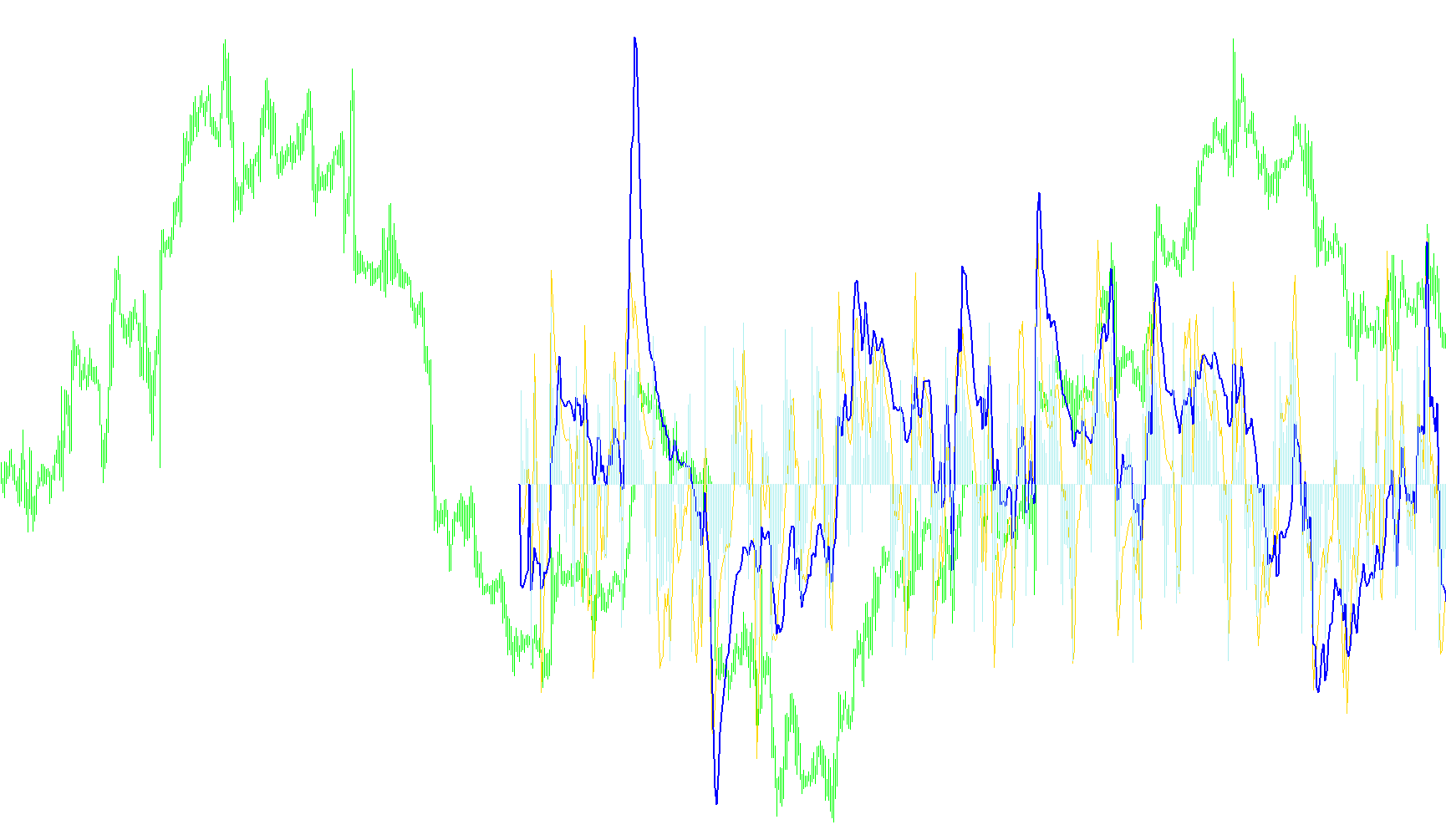
The Woodies CCI is a specialized technical analysis tool designed to provide traders with a comprehensive view of market momentum and price volatility. Unlike standard indicators that rely on a single data point, this script synthesizes multiple layers of information into a visual format to help identify trends more clearly.
Core Logic and Methodology
The primary logic of this script revolves around the Commodity Channel Index (CCI). The CCI is an oscillator that measures how far the current price of an asset deviates from its historical average. By using various timeframes simultaneously, the script allows you to see both "fast" movements (short-term fluctuations) and "slow" movements (long-term trends).
Key components of its operation include:
- Multi-Layered Analysis: The script calculates nine different CCI values at once. These are based on a range of periods, starting from very short intervals (like 6 bars) to much longer ones (up to 50 bars). By overlaying these various speeds, the indicator helps distinguish between temporary price "noise" and sustained market shifts.
- Trend Confluence: Because the script tracks multiple different periods at the same time, it aims to show where different trend cycles overlap. When several of these lines move in the same direction, it provides a stronger signal of market momentum.
- Visual Dynamics: The logic produces two distinct types of visual data:
- Lines: These represent the various historical periods being tracked, allowing you to see the "path" of different trend speeds.
- Histogram: This adds a dynamic visual element that helps emphasize the current momentum of the fastest period, providing a quick snapshot of immediate price action.
How it Functions for the User
When applied to a trading chart, the script automatically processes historical data to plot these various layers in a separate window below your main price chart. It is designed to be reactive; as new prices come in, the script updates all nine calculations instantly.
Essentially, instead of looking at just one line to guess where the market is going, this tool provides a "bundle" of data. It allows you to observe how short-term momentum relates to long-term trends, helping you identify potential entry or exit points based on whether the different trend layers are in agreement or beginning to diverge.
/*-----------------------------+
|			       |
| Shared by www.Aptrafx.com    |
|			       |
+------------------------------*/

//+------------------------------------------------------------------+
//|                                                   WoodiesCCI.mq4 |
//|                                                             Rosh |
//|                                        http://www.metaquotes.net |
//+------------------------------------------------------------------+
#property copyright "created by Luis Damiani; converted by Rosh; modified by Ron"
#property link      "http://www.metaquotes.net"

#property indicator_separate_window
#property indicator_buffers 8
#property indicator_color1 Red
#property indicator_color2 White
#property indicator_color3 White
#property indicator_color4 White
#property indicator_color5 White
#property indicator_color6 White
#property indicator_color7 White
#property indicator_color8 White

// input parameters
extern int       A_period=6;    //Fast
extern int       B_period=14;
extern int       C_period=20;
extern int       D_period=25;
extern int       E_period=30;
extern int       F_period=35;
extern int       G_period=40;
extern int       H_period=45;
extern int       I_period=50;
extern int       num_bars=550;

// parameters
int shift=0;
bool initDone=true;
int bar=0;
int prevbars=0;
int startpar=0;
int cs=0;
int prevcs=0;
string commodt="nonono";
int frame=0;
int bars=0;


//---- buffers
double FastWoodieCCI[];
double HistoWoodieCCI[];

double SlowWoodieCCI[];
double SlowWoodieCCI2[];
double SlowWoodieCCI3[];
double SlowWoodieCCI4[];
double SlowWoodieCCI5[];
double SlowWoodieCCI6[];
double SlowWoodieCCI7[];
double SlowWoodieCCI8[];
//+------------------------------------------------------------------+
//| Custom indicator initialization function                         |
//+------------------------------------------------------------------+
int init()
  {
//---- indicators
   SetIndexStyle(0,DRAW_LINE);
   SetIndexBuffer(0,FastWoodieCCI);

   SetIndexStyle(1,DRAW_LINE,1,2);
   SetIndexBuffer(1,SlowWoodieCCI);

   SetIndexStyle(1,DRAW_LINE,1,2);
   SetIndexBuffer(1,SlowWoodieCCI2);

   SetIndexStyle(1,DRAW_LINE,1,2);
   SetIndexBuffer(1,SlowWoodieCCI3);

   SetIndexStyle(1,DRAW_LINE,1,2);
   SetIndexBuffer(1,SlowWoodieCCI4);

   SetIndexStyle(1,DRAW_LINE,1,2);
   SetIndexBuffer(1,SlowWoodieCCI5);

   SetIndexStyle(1,DRAW_LINE,1,2);
   SetIndexBuffer(1,SlowWoodieCCI6);

   SetIndexStyle(1,DRAW_LINE,1,2);
   SetIndexBuffer(1,SlowWoodieCCI7);

   SetIndexStyle(1,DRAW_LINE,1,2);
   SetIndexBuffer(1,SlowWoodieCCI8);

   SetIndexStyle(2,DRAW_HISTOGRAM);
   SetIndexBuffer(2,HistoWoodieCCI);
//----
   return(0);
  }
//+------------------------------------------------------------------+
//| Custor indicator deinitialization function                       |
//+------------------------------------------------------------------+
int deinit()
  {
//---- TODO: add your code here

//----
   return(0);
  }
//+------------------------------------------------------------------+
//| Custom indicator iteration function                              |
//+------------------------------------------------------------------+
int start()
  {
   int    counted_bars=IndicatorCounted();
//---- TODO: add your code here

//checksum used to see if parameters have been changed
cs= A_period+B_period+num_bars;

//params haven't changed only need to calculate new bar
if ((cs==prevcs)&&(commodt==Symbol())&&(frame==(Time[4]-Time[5]))&&((Bars-prevbars)<2))
   startpar=Bars-prevbars;
else
   startpar=-1;

commodt=Symbol();
frame=Time[4]-Time[5];
prevbars = Bars;
prevcs = cs;

if (startpar==1 | startpar==0)
   bar=startpar;
else
   initDone = true;

if (initDone)
   {
   FastWoodieCCI[num_bars-1]=0;
   SlowWoodieCCI[num_bars-1]=0;
   SlowWoodieCCI2[num_bars-1]=0;
   SlowWoodieCCI3[num_bars-1]=0;
   SlowWoodieCCI4[num_bars-1]=0;
   SlowWoodieCCI5[num_bars-1]=0;
   SlowWoodieCCI6[num_bars-1]=0;
   SlowWoodieCCI7[num_bars-1]=0;
   SlowWoodieCCI8[num_bars-1]=0;
   HistoWoodieCCI[num_bars-1]=0;
   //SetIndexValue(num_bars-1, 0);
   //SetIndexValue2(num_bars-1, 0);
   bar=num_bars-2;
   initDone=false;
   };

//SetLoopCount(0);
for (shift = bar;shift>=0;shift--)
   {
   FastWoodieCCI[shift]=iCCI(NULL,0,B_period,PRICE_TYPICAL,shift);
   SlowWoodieCCI[shift]=iCCI(NULL,0,A_period,PRICE_TYPICAL,shift);
   SlowWoodieCCI2[shift]=iCCI(NULL,0,C_period,PRICE_TYPICAL,shift);
   SlowWoodieCCI3[shift]=iCCI(NULL,0,D_period,PRICE_TYPICAL,shift);
   SlowWoodieCCI4[shift]=iCCI(NULL,0,E_period,PRICE_TYPICAL,shift);
   SlowWoodieCCI5[shift]=iCCI(NULL,0,F_period,PRICE_TYPICAL,shift);
   SlowWoodieCCI6[shift]=iCCI(NULL,0,G_period,PRICE_TYPICAL,shift);
   SlowWoodieCCI7[shift]=iCCI(NULL,0,H_period,PRICE_TYPICAL,shift);
   SlowWoodieCCI8[shift]=iCCI(NULL,0,I_period,PRICE_TYPICAL,shift);
   HistoWoodieCCI[shift]=iCCI(NULL,0,A_period,PRICE_TYPICAL,shift);
   //SetIndexValue(shift,iCCIEx(A_period,PRICE_TYPICAL,shift));
   //SetIndexValue2(shift,iCCIEx(B_period,PRICE_TYPICAL,shift));
   };

//----
   return(0);
  }
//+------------------------------------------------------------------+
Comments