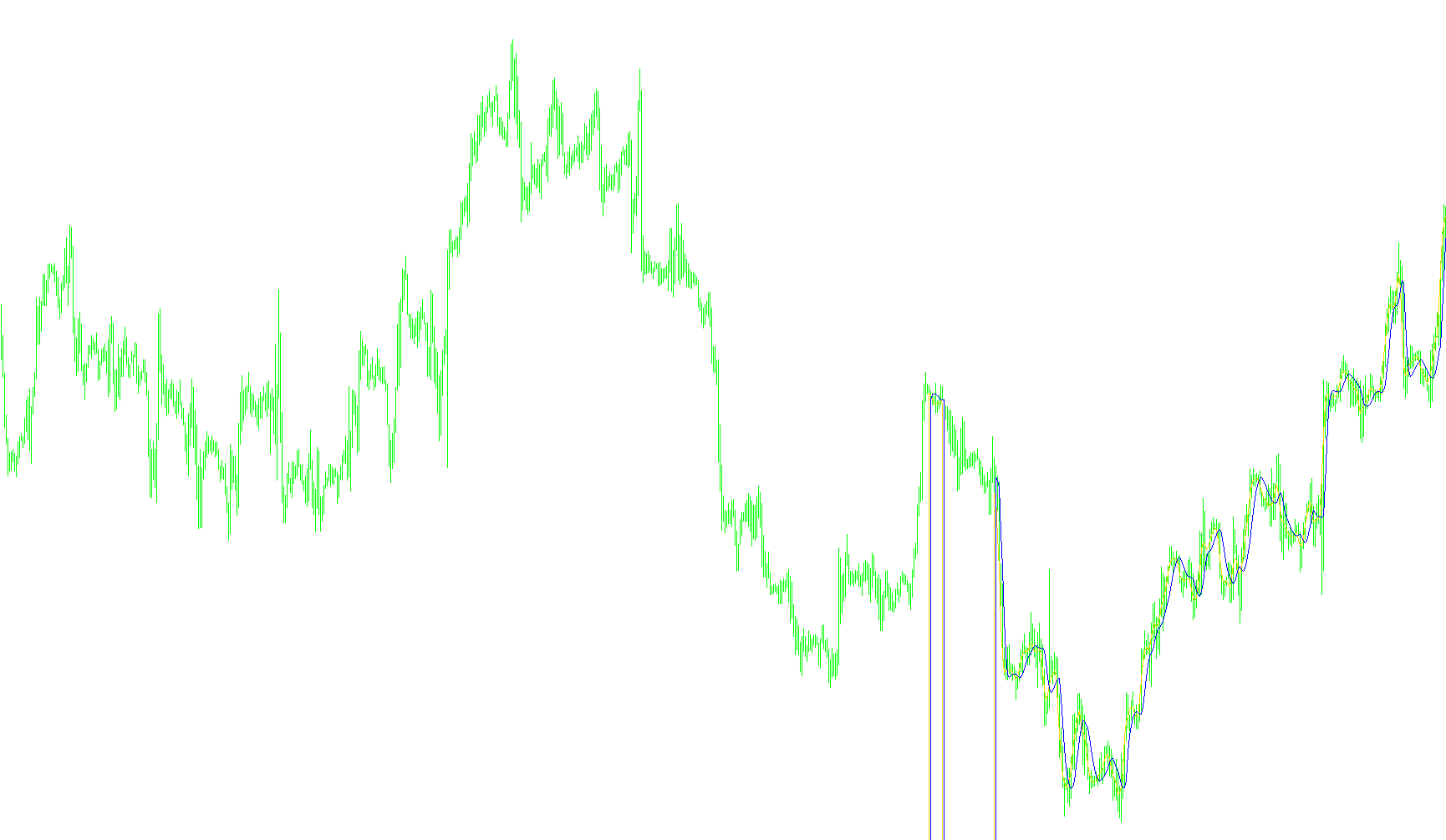
This script implements a sophisticated technical analysis indicator known as the Jurik Moving Average (JMA). Unlike standard moving averages that can be sluggish or prone to significant "lag" (delaying the signal), this logic is designed to provide a smooth, responsive line that tracks price movements closely while minimizing the noise often found in volatile markets.
The underlying logic functions through several complex layers:
1. Multi-Layered Smoothing
The core of the script doesn't just take a simple average of past prices. It uses a "ring" and "buffer" system to look at price behavior over a specific number of periods. It processes these values through mathematical operations—including square roots, logarithms, and powers—to create a non-linear smoothing effect. This allows the indicator to distinguish between minor market noise and actual trend shifts.
2. Dynamic Adaptation (Phase Logic)
A key feature of this script is its ability to adapt to different market conditions dynamically. It calculates "phases" based on the input parameters. When the market moves rapidly, the logic adjusts its sensitivity so that the line stays closer to the current price; when the market is consolidating or moving slowly, it stabilizes to prevent "whipsawing" (false signals caused by minor fluctuations).
3. Velocity and Acceleration Tracking
The script tracks not just where the price is, but also how fast it is moving (velocity) and how that speed is changing (acceleration). By comparing current price changes against historical averages within the buffer, the indicator can "anticipate" the curve of a trend rather than simply reacting to where the price was a few bars ago.
4. Dual-Line Processing
The script is configured to run two independent JMA calculations simultaneously on your chart:
- JMA 1: Uses a shorter period and specific offset to catch immediate price movements.
- JMA 2: Uses a longer period to identify the broader trend.
By utilizing two different sets of periods (e.g., 5 and 8) and different price sources (like Open, Close, or High/Low averages), you can observe how the short-term momentum interacts with the long-term trend.
5. Visual Output
The result is rendered as two distinct lines on your trading platform. Because of the high level of mathematical refinement in the JMA logic, these lines appear very "fluid" and organic compared to standard moving averages, providing a clearer visual path of market direction while remaining highly responsive to new price data.
//+------------------------------------------------------------------+
//|                                                          JMA.mq4 |
//|                                                           Spiggy |
//|                                                                  |
//+------------------------------------------------------------------+
#property copyright "Spiggy"
#property link      ""

#property indicator_buffers 2

#property indicator_chart_window
#property indicator_color1 Blue
#property indicator_color2 Red

//---- input parameters
extern int       Periods_JMA1 = 5;
extern int       AppliedPrice_JMA1 = 0;
extern int       Offset_JMA1 = -1;

extern int       Periods_JMA2 = 8;
extern int       AppliedPrice_JMA2 = 1;
extern int       Offset_JMA2 = 0;

//---- JMA Buffers
double ExtMapBuffer1[];
double ExtMapBuffer2[];
//---- JMA variables
int       phase=0;
int       BarCount=300;

//+------------------------------------------------------------------+
//| Custom indicator initialization function                         |
//+------------------------------------------------------------------+
int init()
  {
//---- JMA indicators
   SetIndexStyle(0,DRAW_LINE);
   SetIndexStyle(1,DRAW_LINE);
   SetIndexBuffer(0,ExtMapBuffer1);
   SetIndexBuffer(1,ExtMapBuffer2);
   return(0);
  }
//+------------------------------------------------------------------+
//| Custor indicator deinitialization function                       |
//+------------------------------------------------------------------+
int deinit()
  {
//----

//----
   return(0);
  }

//+------------------------------------------------------------------+
//| Custom indicator iteration function                              |
//+------------------------------------------------------------------+
int start() {

   JMA(1,Periods_JMA1,AppliedPrice_JMA1,Offset_JMA1);
   JMA(2,Periods_JMA2,AppliedPrice_JMA2,Offset_JMA2);

}

//+------------------------------------------------------------------+
//| Custom indicator iteration function                              |
//+------------------------------------------------------------------+
int JMA(int OneOrTwo, int Periods, int PriceType, int Offset)
  {
   int    counted_bars=IndicatorCounted();
//----
// variable definitions
bool firstTime=True;
int AccountedBars=0;
int jj=0;
int ii=0;
int shift=0;
double series=0;

double vv=0;
double v1=0;
double v2=0;
double v3=0;
double v4=0;
double s8=0;
double s10=0;
double s18=0;
double s20=0;
int v5=0;
int v6=0;
double s28=0;
double s30=0;
int s38=0;
int s40=0;
int s48=0;
int s50=0;
int s58=0;
int s60=0;
double s68=0;
double s70=0;
double f8=0;
double f10=0;
double f18=0;
double f20=0;
double f28=0;
double f30=0;
double f38=0;
double f40=0;
double f48=0;
double f50=0;
double f58=0;
double f60=0;
double f68=0;
double f70=0;
double f78=0;
double f80=0;
double f88=0;
double f90=0;
double f98=0;
double fA0=0;
double fA8=0;
double fB0=0;
double fB8=0;
double fC0=0;
double fC8=0;
double fD0=0;
double f0=0;
double fD8=0;
double fE0=0;
double fE8=0;
int fF0=0;
double fF8=0;
int value2=0;
double JMA=0;
double prevtime=0;

double list[127];
double ring1[127];
double ring2[10];
double buffer[61];

ArrayInitialize(list,0);
ArrayInitialize(ring1,0);
ArrayInitialize(ring2,0);
ArrayInitialize(buffer,0);

if (firstTime)
{
  AccountedBars = Bars-BarCount;
  firstTime=False;
}

if ((CurTime()-prevtime)<30)
  return(-1);

prevtime=CurTime();
//SetLoopCount(0);
{
  s28 = 63;
  s30 = 64;
  for ( ii = 1 ; ii <= s28 ; ii++)
  {
    list[ii] = -1000000;
  }
  for ( ii = s30 ; ii <= 127  ; ii++ )
  {
    list[ii] = 1000000;
  }
  f0 = 1;
}

//{--------------------------------------------------------------------}
for ( shift=BarCount ; shift >= 0 ; shift-- )
{
   switch(PriceType) {
      case 0:
         series=Close[shift];
         break;
      case 1:
         series=Open[shift];
         break;
      case 2:
         series=High[shift];
         break;
      case 3:
         series=Low[shift];
         break;
      case 4:
         series=(High[shift]+Low[shift])/2;
         break;
      case 5:
         series=(High[shift]+Low[shift]+Close[shift])/3;
         break;
      case 6:
         series=(High[shift]+Low[shift]+Close[shift]+Close[shift])/4;
         break;
  }
  if (fF0 < 61)
  {
    fF0= fF0 + 1;
    buffer[fF0] = series;
  }
  //{--------------------------------------------------------------------}
  // { main cycle }
  if (fF0 > 30)
  {
    if (Periods < 1.0000000002)
    {
      f80 = 0.0000000001; //{1.0e-10}
    }
    else
    {
      f80 = (Periods - 1) / 2.0;
    }

    if (phase < -100)
    {
      f10 = 0.5;
    }
    else
    {
      if (phase > 100)
      {
           f10 = 2.5;
      }
      else
      {
        f10 = phase / 100 + 1.5;
      }
    }

    v1 = MathLog(MathSqrt(f80));
    v2 = v1;
    if (v1 / MathLog(2.0) + 2.0 < 0.0)
    {
      v3 = 0;
    }
    else
    {
      v3 = v2 / MathLog(2.0) + 2.0;
    }
    f98 = v3;

    if (0.5 <= f98 - 2.0)
    {
      f88 = f98 - 2.0;
    }
    else
    {
      f88 = 0.5;
    }

    f78 = MathSqrt(f80) * f98;
    f90 = f78 / (f78 + 1.0);
    f80 = f80 * 0.9;
    f50 = f80 / (f80 + 2.0);

    if (f0 != 0)
    {
      f0 = 0;
      v5 = 0;
      for ( ii = 1 ; ii <=29 ; ii++ )
      {
        if (buffer[ii+1] != buffer[ii])
        {
          v5 = 1.0;
        }
      }

      fD8 = v5*30.0;
      if (fD8 == 0)
      {
        f38 = series;
      }
      else
      {
        f38 = buffer[1];
      }
      f18 = f38;
      if (fD8 > 29)
        fD8 = 29;
    }
    else
      fD8 = 0;

    for ( ii = fD8 ; ii >= 0 ; ii-- )
    { //{ another bigcycle...}
      value2=31-ii;
      if (ii == 0)
      {
        f8 = series;
      }
      else
      {
        f8 = buffer[value2];
      }
      f28 = f8 - f18;
      f48 = f8 - f38;
      if (MathAbs(f28) > MathAbs(f48))
      {
        v2 = MathAbs(f28);
      }
      else
      {
        v2 = MathAbs(f48);
      }
      fA0 = v2;
      vv = fA0 + 0.0000000001; //{1.0e-10;}

      if (s48 <= 1)
      {
        s48 = 127;
      }
      else
      {
        s48 = s48 - 1;
      }
      if (s50 <= 1)
      {
        s50 = 10;
      }
      else
      {
        s50 = s50 - 1;
      }
      if (s70 < 128)
        s70 = s70 + 1;
      s8 = s8 + vv - ring2[s50];
      ring2[s50] = vv;
      if (s70 > 10)
      {
        s20 = s8 / 10;
      }
      else
        s20 = s8 / s70;

      if (s70 > 127)
      {
        s10 = ring1[s48];
        ring1[s48] = s20;
        s68 = 64;
        s58 = s68;
        while (s68 > 1)
        {
          if (list[s58] < s10)
          {
            s68 = s68 *0.5;
            s58 = s58 + s68;
          }
          else
          if (list[s58] <= s10)
          {
            s68 = 1;
          }
          else
          {
            s68 = s68 *0.5;
            s58 = s58 - s68;
          }
        }
      }
      else
      {
        ring1[s48] = s20;
        if (s28 + s30 > 127)
        {
          s30 = s30 - 1;
          s58 = s30;
        }
        else
        {
          s28 = s28 + 1;
          s58 = s28;
        }
        if (s28 > 96)
        {
          s38 = 96;
        }
        else
          s38 = s28;
        if (s30 < 32)
        {
          s40 = 32;
        }
        else
          s40 = s30;
      }

      s68 = 64;
      s60 = s68;
      while (s68 > 1)
      {
        if (list[s60] >= s20)
        {
          if (list[s60 - 1] <= s20)
          {
            s68 = 1;
          }
          else
          {
            s68 = s68 *0.5;
            s60 = s60 - s68;
          }
        }
        else
        {
          s68 = s68 *0.5;
          s60 = s60 + s68;
        }
        if ((s60 == 127) && (s20 > list[127]))
          s60 = 128;
      }

      if (s70 > 127)
      {
        if (s58 >= s60)
        {
          if ((s38 + 1 > s60) && (s40 - 1 < s60))
          {
            s18 = s18 + s20;
          }
          else
          if ((s40 > s60) && (s40 - 1 < s58))
            s18 = s18 + list[s40 - 1];
        }
        else
        if (s40 >= s60)
        {
          if ((s38 + 1 < s60) && (s38 + 1 > s58))
            s18 = s18 + list[s38 + 1];
        }
        else
        if (s38 + 2 > s60)
        {
          s18 = s18 + s20;
        }
        else
        if ((s38 + 1 < s60) && (s38 + 1 > s58))
          s18 = s18 + list[s38 + 1];

        if (s58 > s60)
        {
          if ((s40 - 1 < s58) && (s38 + 1 > s58))
          {
            s18 = s18 - list[s58];
          }
          else
          if ((s38 < s58) && (s38 + 1 > s60))
            s18 = s18 - list[s38];
        }
        else
        {
          if ((s38 + 1 > s58) && (s40 - 1 < s58))
          {
            s18 = s18 - list[s58];
          }
          else
          if ((s40 > s58) && (s40 < s60))
            s18 = s18 - list[s40];
        }
      }

      if (s58 <= s60)
      {
        if (s58 >= s60)
        {
          list[s60] = s20;
        }
        else
        {
          for ( jj = s58 + 1 ; jj <= s60 - 1 ; jj++ )
          {
            list[jj - 1] = list[jj];
          }
          list[s60 - 1] = s20;
        }
      }
      else
      {
        for ( jj = s58 - 1 ; jj >= s60 ; jj-- )
        {
          list[jj + 1] = list[jj];
        }
        list[s60] = s20;
      }

      if (s70 <= 127)
      {
        s18 = 0;
        for (jj = s40 ; jj <= s38 ; jj++)
        {
          s18 = s18 + list[jj];
        }
      }
      f60 = s18 / (s38 - s40 + 1);
      if (fF8 + 1 > 31)
      {
        fF8 = 31;
      }
      else
        fF8 = fF8 + 1;

      if (fF8 <= 30)
      {
        if (f28 > 0)
        {
          f18 = f8;
        }
        else
          f18 = f8 - f28 * f90;
        if (f48 < 0)
        {
          f38 = f8;
        }
        else
          f38 = f8 - f48 * f90;
        fB8 = series;
        //{EasyLanguage does not have "continue" statement}
        if (fF8 != 30)
        {
          continue;
        }
        if (fF8 == 30)
        {
          fC0 = series;
          if (MathCeil(f78) >= 1)
          {
            v4 = MathCeil(f78);
          }
          else
            v4 = 1;
          fE8 = MathCeil(v4);
          if (MathFloor(f78) >= 1)
          {
            v2 = MathFloor(f78);
          }
          else
            v2 = 1;
          fE0 = MathCeil(v2);
          if (fE8 == fE0)
          {
            f68 = 1;
          }
          else
          {
            v4 = fE8 - fE0;
            f68 = (f78 - fE0) / v4;
          }
          if (fE0 <= 29)
          {
            v5 = fE0;
          }
          else
            v5 = 29;
          if (fE8 <= 29)
          {
            v6 = fE8;
          }
          else
            v6 = 29;
          fA8 = (series - buffer[fF0 - v5]) * (1 - f68) / fE0 + (series - buffer[fF0 - v6]) * f68 / fE8;
        }
      }
      else
      {
        if (f98 >= MathPow(fA0/f60, f88))
        {
          v1 = MathPow(fA0/f60, f88);
        }
        else
          v1 = f98;
        if (v1 < 1)
        {
          v2 = 1;
        }
        else
        {
          if (f98 >= MathPow(fA0/f60, f88))
          {
            v3 = MathPow(fA0/f60, f88);
          }
          else
            v3 = f98;
          v2 = v3;
        }
        f58 = v2;
        f70 = MathPow(f90, MathSqrt(f58));
        if (f28 > 0)
        {
          f18 = f8;
        }
        else
        {
          f18 = f8 - f28 * f70;
        }
        if (f48 < 0)
        {
          f38 = f8;
        }
        else
        {
          f38 = f8 - f48 * f70;
        }
      }
    }

    if (fF8 > 30)
    {
      f30 = MathPow(f50, f58);
      fC0 = (1 - f30) * series + f30 * fC0;
      fC8 = (series - fC0) * (1 - f50) + f50 * fC8;
      fD0 = f10 * fC8 + fC0;
      f20 = -f30 * 2;
      f40 = f30 * f30;
      fB0 = f20 + f40 + 1;
      fA8 = (fD0 - fB8) * fB0 + f40 * fA8;
      fB8 = fB8 + fA8;
    }
    JMA= fB8;
  }
  if (fF0 <= 30)
  {
    JMA=0;
  }

  if(OneOrTwo == 1) {
//   Print ("JMA is " + JMA + " shift is " + shift);
     ExtMapBuffer1[shift-Offset]=JMA;
  } else {
//   Print ("JMA is " + JMA + " shift is " + shift);
     ExtMapBuffer2[shift-Offset]=JMA;
  }
  if (shift>0)
  {
    AccountedBars=AccountedBars+1;
  }
}
//----
   return(0);
  }
Comments